This year's trends and what to do with them in your kitchen
Most food trends only reach your place once they are past their peak somewhere else. That is fine, as long as you know which ones to skip and which one you could have on the menu inside a week.
Familiar food with a turn in it
Your guest wants something they know, with just enough news in it to be worth mentioning. That is not a new trend, but it is the strongest one going. A toastie is a toastie. A toastie with rendang and a spoon of sambal is a dish people photograph.
In the Netherlands you do not have to look far for it. Indonesian, Surinamese, Turkish and Moroccan cooking are already on the street and already in your guests’ palate. Which is why ketjap, sambal, harissa and gochujang turn up on menus in places that are not Asian restaurants at all.
The kapsalon shows how far that can go. It started in a Rotterdam shawarma shop, was on counters across the country within a few years and is still there. Not from a trend report, but from what was already standing in the shop.
Which is why you start here. You cook with what you have, buy in one jar, and put the dish on for four weeks.
Nostalgia works, but the Dutch kind
The American version of this trend is about packet sweets. Here people miss something else: the bitterbal with their beer, the sausage roll from the baker, appeltaart under a mountain of cream, the chips from the place they went to as a child.
- Make a classic yourself instead of buying it in: a bitterbal from your own braised beef tastes nothing like the frozen one.
- Put on one pudding that tastes of the past and is about nothing else.
- Run your old menu for a week, at the quality and the prices of today.
Nostalgia sells itself on one condition: it has to beat the original.
Food guests feel good about
Eating well is no longer a punishment. Your guest wants a dish that tastes good and does something for them afterwards, and they look harder the more they are charged.
Protein has become a selling point
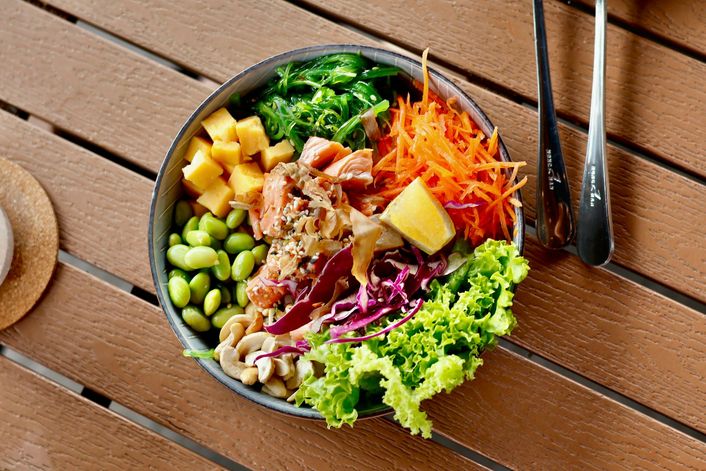
Protein has been climbing for a few years and it is not going anywhere. Anyone putting down sixteen euros for a bowl wants to know it will carry them through the afternoon.
Good news for your menu, because it is mostly a matter of writing down what is already in there. Name the chicken, the tofu, the lentils or the halloumi in your description instead of only the sauce. Put an add-on beside it: an egg on top, extra chicken, a spoon of tempeh. That lifts your average order without a new dish.
Plant-forward, without the word at the top
Plant-based food stopped being a niche here long ago, including among guests who happily eat meat. What is changing is that it no longer has to imitate meat. Attention is moving to vegetables that carry a main course on their own: roasted celeriac, smoked lentils, mushrooms with enough umami to hold a plate.
Just keep the word out of the title. Someone looking for a main course is quicker to choose roasted celeriac with hazelnut and tarragon than vegetarian main. Save the label for the filter on your online menu, where people search for it deliberately.
The alcohol-free list is no longer an afterthought
Alcohol-free beer is on practically every Dutch menu and nobody blinks at it. What is arriving now is the rest of the bar: alcohol-free cocktails properly made, with fresh syrup, herbs and a garnish. Not cola with ice, because nobody orders that for the flavour.
The guest ordering this is not only the guest who never drinks. It is the designated driver, the colleague with an early start, the pregnant friend at the table.
Then there is the part that shows up in your bank account. Alcohol carries 21% VAT, alcohol-free drinks 9%. So the same price leaves you more, and syrup, tonic and herbs cost a fraction of spirits.
Two or three well-made drinks are enough. Put them among the ordinary cocktails, not in a corner at the bottom, because nobody looks there.
Where it comes from counts
More guests want to know where their food comes from. Not all of them and not always out loud, but enough to act on.
Naming one supplier does more than the word sustainable ten times over. The cheese from the farm one village along, the fish from the local auction, the vegetables from the grower you drive to yourself: those are lines on your menu nobody can copy.
Be precise, though. Words like local and from round here are not protected, but they do have to be true. A word like organic is protected, and you use it only if you are certified for it. Check what applies to your business before you write it down.
Labels then do part of the work. A Beter Leven welfare star on the meat, MSC or ASC on the fish: small marks that say enough, as long as you are genuinely signed up. Put them in the description of the dish, where the choice is made.
Takeaway has become the main course
For many places, takeaway and delivery are no longer a sideline but a second business, with their own peak and their own kind of guest. They are rarely treated that way.
It starts with the food. A dish that is perfect on a plate can be something else after twenty minutes in a container. Chips get packed separately, sauce goes on the side, anything crisp travels in its own bag. And some dishes simply stay off your delivery menu. That beats a poor delivery version.
Then the packaging. Since 2023 you charge a separate fee in the Netherlands for single-use cups and containers containing plastic that you hand over. Check the current rules with the Dutch government before you order. Then make something of it: a container that holds the heat and does not go soggy, with your own sticker on it, is the only piece of your business your guest has at home.
And then the order itself, because convenience is nearly always a matter of removing steps.
- Can somebody check out without creating an account first?
- Are your best sellers at the top, with a photograph?
- Can a regular repeat their last order in one tap?
- Do they see a sensible add-on rather than a list of thirty extras?
- Does your menu load quickly on a phone with poor signal?
Every step you remove earns you orders. And an order arriving directly on your own page costs you no commission, while the same order through Thuisbezorgd or Uber Eats takes a percentage of the whole amount.
Texture is the cheapest upgrade
Ask somebody why they reorder a dish and the answer is rarely the recipe. It is the one crunchy thing on top. Contrast is what makes a plate memorable: hot against cold, soft against crisp, rich against sharp.
- Fried onions or crisp shallots over a creamy soup.
- Chilli crisp on soft eggs, over rice or through the macaroni cheese.
- Quick-pickled red onion on something rich: a burger, a sandwich, a bowl of stew.
- Toasted nuts, crisp lentils or puffed grains over a salad or a bowl.
It costs you one extra step and an ingredient that keeps well. Something you already sell with a crunchy element on it is already different from last week.
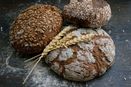
The same goes for bread. A good sourdough with real butter to start costs almost nothing and is the first thing anyone tastes of your kitchen. If you do not bake it yourself, the baker round the corner is a perfectly good story for your menu.
What has had its day
Not every trend holds. Here is what guests have had enough of, and what replaces it.
| On the way out | What to do instead |
|---|---|
| A QR code as the only menu | A fast mobile menu as an ordinary web page, plus a few printed copies |
| Costs that appear only at checkout | Build them into your price or name them at the first step |
| Words like light, guilt-free and superfood | Write down what is in it and let your guest draw the conclusion |
| Fusion dishes carrying eight ideas at once | One well-executed dish with two flavours that do something to each other |
| Artificial colours and edible glitter | Colour from the season: herbs, flowers, roasted vegetables |
The QR code deserves a note, because the code itself is not the problem. There is research suggesting that a menu behind a QR code weakens the bond with the guest. In practice it goes wrong at the loading: five taps, a PDF that zooms out to nothing, no photographs. An ordinary, fast web page solves that, and it helps your visibility too.
Surprise costs are the second thing guests walk away from. They will pay for convenience, but not when the amount appears as they go to pay. On a delivery platform you do not decide that, on your own ordering page you do.
Do you follow every trend? No, use them as a filter
Following everything is as expensive as following nothing. A menu that swells every season costs you stock, waste and kitchen time, and your guest no longer knows what your place is good at. Running the same menu for ten years does not work either, because your guests do change.
A trend is only yours once you can run it on a full Saturday night.
So choose one. Put it on for four weeks as a limited-time dish, with a good position and a photograph, and then look at your sales figures instead of your instinct.
On your own ordering page a dish like that is live in a minute and gone again just as fast. That is the real advantage of a channel you own: experimenting becomes cheap.
Common questions
- Which food trends are genuinely carrying on in the Netherlands in 2026?
- Familiar food with an international turn, dishes where the protein is clearly named, vegetables that carry a main course on their own, a proper alcohol-free list, sourcing you name supplier by supplier, and food that survives a journey in a container. Texture is the cheapest of the lot: one crunchy element on something you already sell.
- Should I put alcohol-free cocktails on my menu?
- If you have a bar, it is one of the few additions that pays for itself. Alcohol-free drinks carry 9% VAT instead of 21%, the cost per glass is lower than anything with spirits in it, and you serve the guest who would otherwise order tap water. Start with two or three, listed among the ordinary cocktails.
- Does a QR menu still work?
- As your only menu, it is not a good idea. Guests give up on slow loading and on a PDF that is unreadable on a phone. Put your menu online as an ordinary, fast web page with photographs and clear categories, and keep a few printed menus beside it.
- Can I write organic or local on my menu?
- Organic is a protected term you may only use if you are certified for it, so check what applies to your business first. Words like local and from round here are not protected, but they still have to be true. Naming the farmer or the baker is stronger than any adjective.
- Do I have to charge for disposable packaging on takeaway orders?
- Since 2023, single-use cups and containers containing plastic that you hand over carry a separate fee. You set the amount yourself, but charging something is the rule. Check the current conditions with the Dutch government before you order new packaging.
- How do I test a new dish without taking a risk?
- Put it on for four weeks as a limited-time dish, in a good position and with a photograph. Buy small and use as much of what you already stock as you can. Agree with yourself in advance what counts as enough, a number per week for instance, then either drop it or make it permanent. Test one thing at a time.